

Most legal biographies are nothing more than expensive PR brochures designed to protect a legacy rather than reveal a life. They offer a sanitized, high-altitude view of the law that feels more like a press release than a reality check. You're likely tired of the polished, ghost-written narratives that treat the courtroom like a stage for heroics. It's frustrating to pick up an attorney memoir book only to find dry, academic prose or sensationalized drama that bears no resemblance to the actual grind of the justice system. You want the sweat. You want the sleepless nights and the crushing weight of a career spent in the trenches.
This article will show you why the most impactful stories are found in the unvarnished truth of a 40-year career. You'll discover how to find a compelling, gritty read that captures the real emotional toll of the law. We'll look past the corporate sheen to uncover books that offer a genuine insider's perspective on a system that is often as broken as it is vital.
Key Takeaways
- Learn to distinguish between sanitized professional biographies and the raw witness accounts that define the true legal experience.
- Discover why a gritty, unvarnished tone in an attorney memoir book is the only way to capture the visceral reality of the courtroom trenches.
- Debunk cinematic myths of the "aha!" moment and understand the slow, methodical endurance required to win cases in the real world.
- Gain insight into how four decades of legal practice transform a practitioner into a battle-hardened observer of human nature and systemic truth.
- Explore the unique intensity of A Grunt Lawyer in the Trenches, a narrative built on the hard-won wisdom of a career spent on the front lines.
Why the Attorney Memoir Book Remains a Vital Genre
A true attorney memoir book isn't a collection of victory laps or a sanitized curriculum vitae. It's a witness statement. While academic texts focus on the mechanics of the law, a memoir captures the blood and dust of the courtroom floor. It's about the person behind the professional bar card. Readers don't want a lecture on civil procedure. They want the raw intensity of standing between a client and a life-altering judgment. This genre survives because it translates the cold, sterile language of jurisprudence into a visceral, lived-in experience.
Narrative non-fiction has a unique power to make complex systems accessible to anyone. It moves beyond the dry "what happened" to the heavy "what it felt like." Classic works like My Life in Court proved decades ago that there is a deep public hunger for these stories. When the legal system faces intense scrutiny, these books provide a necessary window into the machinery of justice. They offer an unfiltered look at the struggle for truth in a world governed by rigid procedure and high stakes.
The Appeal of the First-Person Attorney Autobiography
The courtroom is a closed world. Most people only see it through the distorted lens of television or from the terrifying position of a litigant. An autobiography grants insider access to the heavy, quiet spaces the public rarely enters. Lawyers are professional storytellers. They spend their careers weaving facts into narratives for juries. When they turn that craft inward, the result is a perspective forged in the trenches of the system. These stories resonate because they offer unvarnished truth where most public biographies offer only corporate polish. They provide a voice for the weary observer who has seen the system at its best and its absolute worst.
Bridging the Gap Between Law and Life
Personal stories explain the "why" behind the "how." A statute is an abstract concept until it's applied to a human life. The memoir serves as a bridge between high-minded rights and tangible, often painful, consequences. It reveals the endurance required to survive forty years of litigation without losing one's soul. A legal memoir is a record of professional endurance and human observation. It documents the evolution of the justice system through the eyes of those who lived it every day. By focusing on the human element, these books turn the abstract into something we can finally understand.
The Anatomy of a Gritty Legal Memoir: Beyond the Polished Narrative
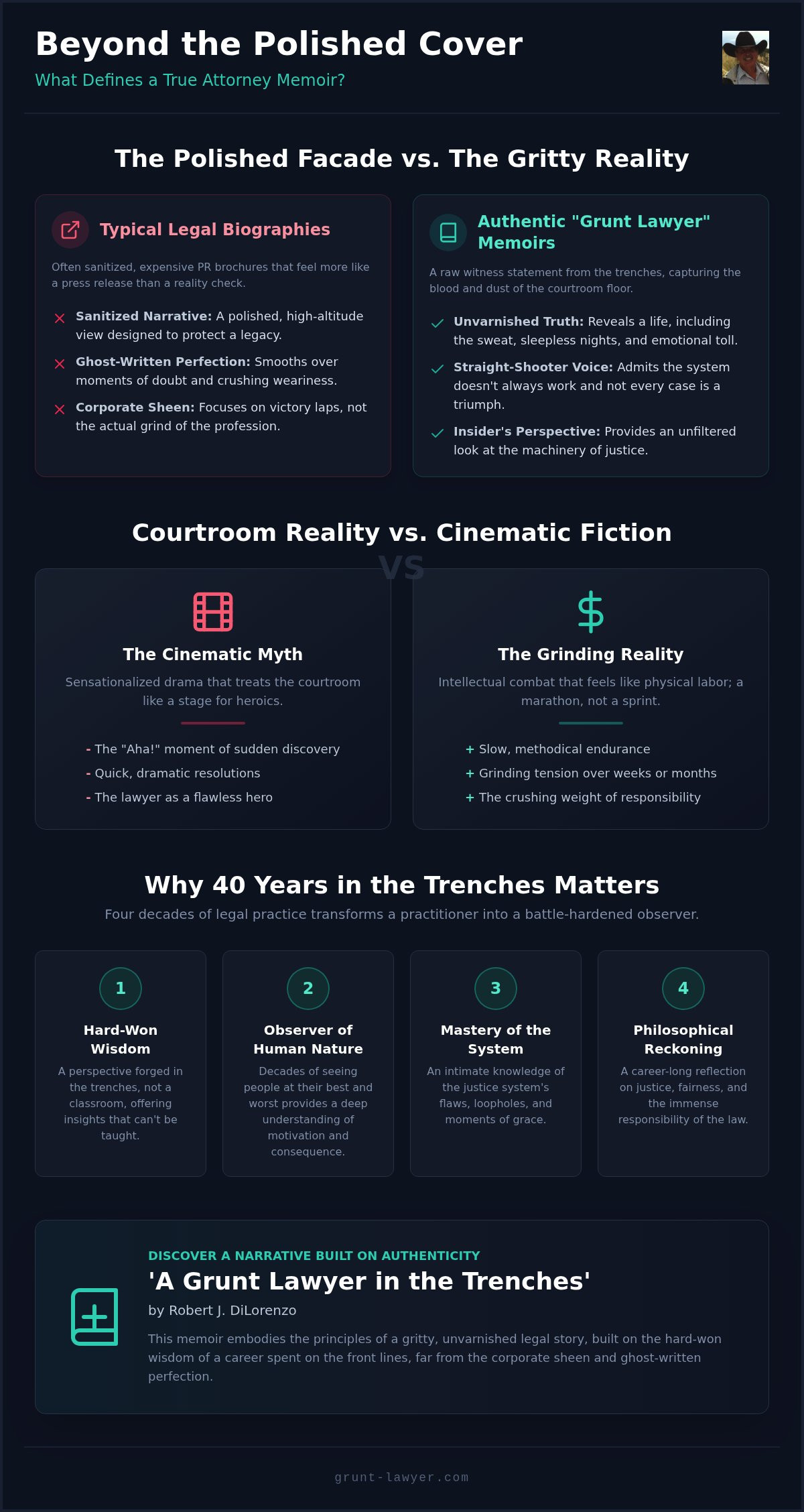
The best attorney memoir book doesn't live on a bestseller list dominated by politicians or media-trained celebrities. It lives in the mud. For decades, the legal publishing market has favored sanitized biographies that read like extended press releases. These books offer a corporate polish that masks the actual grind of the profession. To find the truth, you have to look for the "grunt lawyer." This is the practitioner who spent forty years in the trenches, not in front of a camera. They favor the perspective of the workroom over the green room.
This gritty tone isn't just a stylistic choice. It's a requirement for authenticity. Real legal work is intellectual combat, but it feels like physical labor. It's the heavy lift of a complex discovery process. It's the raw endurance needed for a marathon trial that stretches into weeks of grinding tension. When a veteran describes their career, they should use the language of struggle. They should talk about the weight of the files, the grit in the gears of the bureaucracy, and the exhaustion of the system. This unfiltered observation is what builds trust with a reader who is tired of being lied to by sensationalized dramas.
Authenticity vs. Ghost-Written Perfection
Sanitized memoirs are easy to spot. They lack the jagged edges of reality. A ghost-written book often smooths over the moments of doubt or the crushing weariness that comes with a long-term legal career. A straight-shooter voice, however, admits to the toll. It doesn't pretend every case was a triumph or that the system always works. Even academic circles are starting to recognize the value of these deeper narratives. For instance, the UChicago Law faculty recommendations often highlight memoirs that provide a more nuanced understanding of justice than a standard casebook ever could. A battle-hardened perspective creates a narrative arc that feels earned, not manufactured.
The Role of Reflection in Professional Stories
A great memoir moves beyond a simple play-by-play of court cases. It isn't a resume. It is a philosophical reckoning with a system that demands everything from its practitioners. The weary observer persona is a hallmark of the best veteran accounts. It shows a professional who has moved beyond the need for pretension to offer hard-won wisdom. This deep reflection is what separates a list of accomplishments from a legacy of truth-telling. It transforms a career into a story worth reading. If you want to experience this kind of unvarnished perspective, you should explore the reality of the legal trenches through the eyes of a veteran who has lived them for four decades.
Courtroom Reality vs. Cinematic Fiction: What Memoirs Reveal
Hollywood loves a montage. A few quick clips of a lawyer flipping through files, a dramatic zoom on a highlighter, and suddenly they're ready for trial. It's a lie. In a real attorney memoir book, you'll find that trial preparation is a grueling marathon of endurance. There are no 30-second clips. There are only months of discovery, years of delays, and the slow, methodical sifting through thousands of pages of documents. Real trials aren't won with a sudden "Aha!" moment in the middle of a cross-examination. They are won in the quiet, dusty corners of a law office, long before the jury ever takes their seats. The emotional weight of these cases doesn't dissipate when the credits roll; it stays with the practitioner for decades.
Comparing TV Tropes to the Legal Trenches
The gap between scripted drama and the unvarnished truth is vast. Television requires a pace that the American justice system simply does not follow. While a TV lawyer might get a verdict before the first commercial break, a real-world attorney is often waiting years for a resolution. This delay isn't just a procedural hurdle. It's a psychological weight that shapes the narrator's perspective. The truth is often stranger, and significantly more compelling, than fiction because it involves the unpredictable messiness of human nature rather than a tidy plot point.
| TV Tropes | Courtroom Reality |
|---|---|
| Surprise witnesses and "gotcha" evidence. | Strict discovery rules and years of paper trails. |
| Instant verdicts and rapid-fire pacing. | Procedural grit and long, exhausting delays. |
| Scripted soundbites and moral clarity. | Messy human nature and complex gray areas. |
The Unvarnished Truth About Litigation
The physicality of a trial is something television never captures. It's the literal weight of the evidence. It's lugging heavy boxes into a courtroom, the late nights fueled by cold coffee, and the physical toll that standing on hard floors for ten hours takes on a body. This isn't glamorous work. It's a psychological struggle against a system that is often indifferent to the individual. Every attorney memoir book worth its salt must address this exhaustion. Trial law is intellectual warfare fought with the stamina of a marathon runner. It requires a level of resilience that most people never have to summon, and that is where the real story lives.
Why 40 Years in the Trenches Matters for Readers
Time is the ultimate filter for truth. A new practitioner often views the law as a series of intellectual puzzles to be solved, but a forty-year veteran understands that those puzzles are built from the lives of real people. When you pick up an attorney memoir book written by someone who survived four decades in the system, you aren't just reading a story. You're examining a map of the legal soul. This long-game perspective strips away the ego of the young advocate and leaves behind the cold, hard clarity of a truth-teller who has nothing left to prove to the bar association.
Hard-won wisdom isn't found in a single high-profile trial or a lucky verdict. It's found in the aggregate of thousands of cases, each leaving a cumulative mark on the narrator's worldview. This transition from advocate to truth-teller is the most valuable aspect of a veteran's voice. They've moved beyond the need for corporate polish. They've seen the evolution of the justice system from the inside, witnessing how rights are won, lost, and often ignored in the daily grind of the courtroom. It's a perspective forged through a relentless cycle of struggle that no academic text can replicate.
The Value of the Veteran Perspective
Aspiring lawyers should seek out stories of longevity over quick success. The "big win" is often a matter of luck or timing, but forty years of survival is a matter of character. A veteran lawyer adopts a "straight-shooter" mentality because they've already faced the worst the system has to offer. They no longer feel the pressure to impress their peers or sugarcoat the reality of their work. This freedom allows them to share a unique philosophy on human nature, one that recognizes both the resilience of the individual and the crushing weight of systemic failure.
Understanding the Justice System Through Longevity
A memoir spanning forty years serves as a vital historical document. It tracks the shifts in legal culture and the changing face of justice through the eyes of someone who stood at the front lines every day. For those entering the legal profession today, these accounts are an essential guide. They provide an unfiltered reality check that balances the idealism of law school with the practical grit of the trenches. To truly understand the weight of this experience, read the unfiltered account of a career spent in the trenches through the lens of a battle-hardened expert.
Ultimately, a veteran's attorney memoir book is about endurance. It's about the emotional and physical stamina required to maintain one's principles in a field that often rewards compromise. By reflecting on forty years of service, the author offers readers a perspective that is as rare as it is necessary, providing a visceral connection to the heart of the American justice system.
Discovering 'A Grunt Lawyer in the Trenches' by Robert J. DiLorenzo
The search for a truly authentic attorney memoir book often ends in frustration when readers are met with ghost-written perfection. Robert J DiLorenzo-Grunt Lawyer offers a sharp pivot away from that sanitized tradition. In "A Grunt Lawyer in the Trenches," the narrative doesn't just describe the law; it breathes the heavy, stale air of the courtroom. This is the definitive account for those who value the grit of the front lines over the shine of a boardroom table. It's a story built on forty years of direct exposure to a system that is as complex as it is unforgiving. Every page carries the weight of a practitioner who has seen the machinery of justice from the inside out.
The 'Grunt Lawyer' Philosophy
In this context, a "Grunt" is the practitioner who handles the heavy lifting. While the media stars chase soundbites, the grunt lawyer is busy with the procedural warfare that actually decides the fate of a case. This book rejects the tired trope of the flawless legal hero. Instead, it offers the visceral experience of a professional who has stayed in the fight long enough to see the unvarnished reality of the justice system. Reading these stories feels like a debriefing from a battle-hardened veteran who no longer cares about protecting the image of the bar. It is raw. It is intense. Most importantly, it's honest about the toll that such a career takes on the human spirit.
How to Experience the Trenches
The truth of the legal system should be accessible to everyone. For the traditionalist who wants to feel the weight of the evidence in their hands, the book is available in both Hardcover and Paperback formats. Digital readers can access the E-book for immediate insight into the litigation grind. However, there is a particular power in the narrated audiobook. Hearing the "voice of experience" adds a layer of personal connection that print alone cannot capture. It allows you to hear the weariness and the hard-won wisdom of a forty-year career directly. This format bridges the gap between the listener and the veteran, making the struggle feel immediate and tangible.
If you are ready to move past the scripted dramas and the academic theories, it's time to step into the reality of the courtroom. This narrative is for the skeptics, the truth-seekers, and the aspiring practitioners who want to know what the law actually feels like. Secure your copy of 'A Grunt Lawyer in the Trenches' and discover the unfiltered truth of the law.
Step Into the Unfiltered Reality of the Law
The justice system isn't a series of scripted victories or cinematic montages. It's a marathon of endurance. You've learned why the most valuable attorney memoir book is one that rejects the corporate polish of the elite in favor of the unvarnished grit of the trenches. Real trials are won through the physical and mental labor of a practitioner who has spent decades navigating the complexities of human nature and systemic failure.
You deserve the truth that only 40 years of unfiltered courtroom experience can provide. Robert J. DiLorenzo offers that perspective directly in his account of life as a veteran trial lawyer. Whether you prefer the weight of a physical page or the personal connection of a narrated voice, this story is accessible to you. You can find the raw intensity of the legal front lines in Hardcover, E-book, or Audiobook formats.
It's time to see the law for what it actually is. Order 'A Grunt Lawyer in the Trenches' today and experience the reality behind the closed courtroom doors. Your journey into the heart of the system starts here.
Frequently Asked Questions
What makes a legal memoir different from a legal textbook?
A legal memoir focuses on the human experience and the emotional weight of practice, while a textbook focuses on statutes and case law. Textbooks provide the "how" of the law through dry, academic instruction. An attorney memoir book provides the "why" and the "how it felt" through personal narrative. It captures the grit of the courtroom trenches that a sterile academic text simply cannot convey. It's the difference between reading a manual and hearing a veteran's story.
Is 'A Grunt Lawyer in the Trenches' suitable for non-lawyers?
Yes, this book is written for anyone who wants to understand the unvarnished reality of the American justice system. It avoids overly dense jargon in favor of visceral storytelling that makes complex legal concepts accessible to the layperson. Whether you're a true crime fan or a citizen curious about how trials actually function, you'll find the narrative compelling. It offers a rare, insider's look at a world that is usually hidden behind closed doors.
Why is the audiobook version of a lawyer memoir often recommended?
The audiobook version allows readers to hear the "voice of experience" directly. There is a specific rhythm and weight to a veteran trial lawyer's speech that adds a layer of authenticity to the story. Hearing the inflection and tone of the author helps to bridge the gap between the listener and the reality of the legal trenches. It transforms the reading experience into a personal conversation with a straight-shooter who has seen it all.
How much of a trial lawyer's memoir is based on real-life cases?
Every story in a reputable attorney memoir book is forged in the reality of the courtroom. While names and specific identifying details may be altered to protect privacy or maintain confidentiality, the procedural grit and the emotional outcomes are grounded in actual practice. These books serve as a witness account of the justice system. They reflect the hard-won wisdom gained from thousands of real-world interactions with clients, judges, and opposing counsel over several decades.
Can reading an attorney memoir help law students prepare for their careers?
It provides a necessary reality check that law school casebooks often omit. Students spend years learning theory, but a memoir reveals the physical and psychological stamina required for a long-term career. It prepares them for the "long game" by showing the weariness of the grind and the importance of resilience. Understanding the emotional toll of the law before entering the profession can help new practitioners build a sustainable approach to their future work.
What does the term 'Grunt Lawyer' actually mean in the legal profession?
A "Grunt Lawyer" is the practitioner who does the heavy lifting on the front lines of the system. They aren't the celebrity figures chasing media attention; they're the ones in the trenches handling the grinding procedural work. This term represents a philosophy of dedication to the craft and the client. It signifies a professional who understands that justice is won through endurance, late nights, and the methodical sifting of evidence rather than flashy soundbites.
Are the stories in 'A Grunt Lawyer in the Trenches' unfiltered?
They are as raw and unvarnished as the law itself. Robert J. DiLorenzo rejects the corporate polish found in many professional biographies to offer a straight-shooter's perspective. The book doesn't sugarcoat the failures of the system or the personal toll of litigation. It aims for a visceral, lived-in perspective that prioritizes truth over pretension. Readers get a front-row seat to the messy, complicated reality of human nature as it plays out in court every day.
What happens if a legal memoir contains sensitive information?
Authors must balance the need for unvarnished truth with their ethical obligations to client confidentiality. This usually involves changing names, locations, and specific dates to ensure that no individual's privacy is compromised. The goal is to preserve the emotional and procedural truth of the experience without violating professional standards. A veteran lawyer knows exactly how to navigate these boundaries while still delivering a narrative that feels authentic and impactful to the reader.

